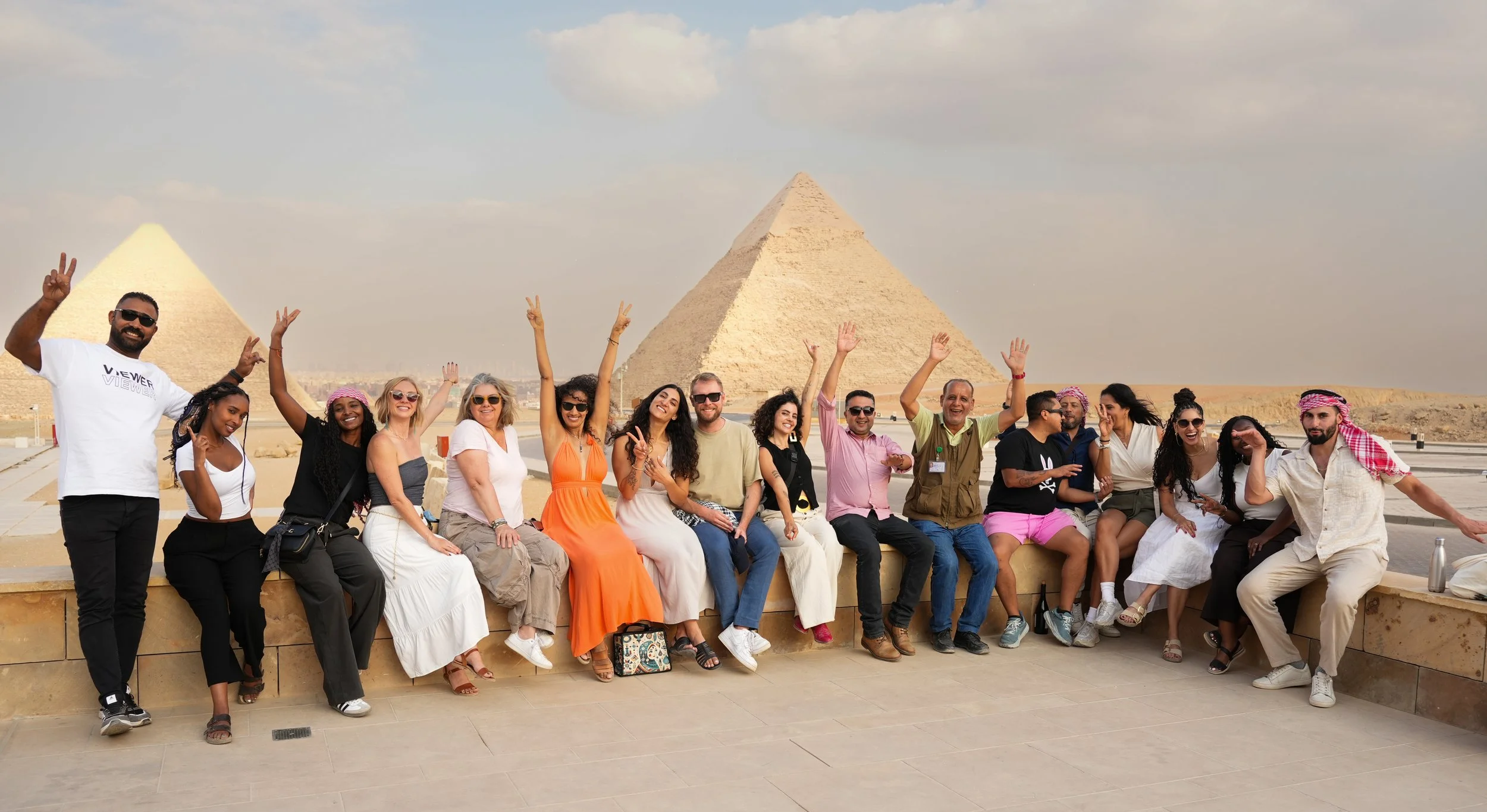
Egypt with Moni group trip from 2025. Check out upcoming trips.
To bring or not to bring…
That is the question, and the whole reason you’re here.
As someone who’s lived in Egypt, traveled all over the country, and hosts group trips year-round, I’m here to tell you exactly what to pack (and not pack) so you can be as prepared as possible for your trip to Egypt.
First, you’ll want to consider a few factors: what time of year you’re visiting Egypt, where you’re going, and what you plan to do while you’re there.
Hiking in Sinai? You’ll need sturdy boots. Scuba diving in the Red Sea? You’ll need sandals and swimwear. Planning to go to Siwa Oasis in the wintertime? You’ll need warm socks and a heavy coat for the nights! Going to all these places? You’ll definitely need to be extra prepared and probably jam-pack your suitcase.
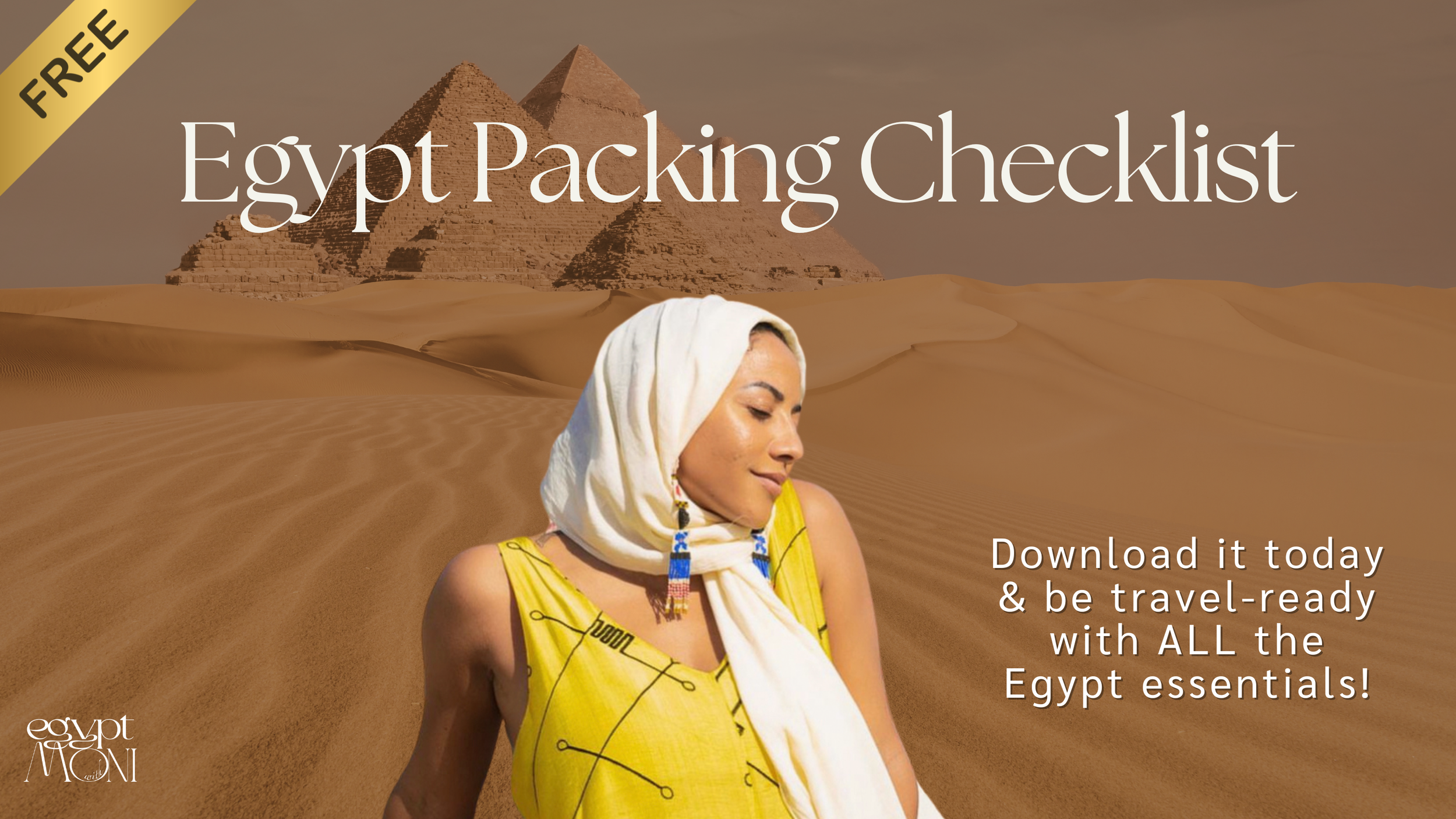
I’ve compiled a free packing checklist for your Egypt trip so you can make sure not to miss any of the essentials. I made it easy for you to download and mark things off as you pack. Continue reading to get more details/context on how to be as prepared as possible for your upcoming trip to Egypt.
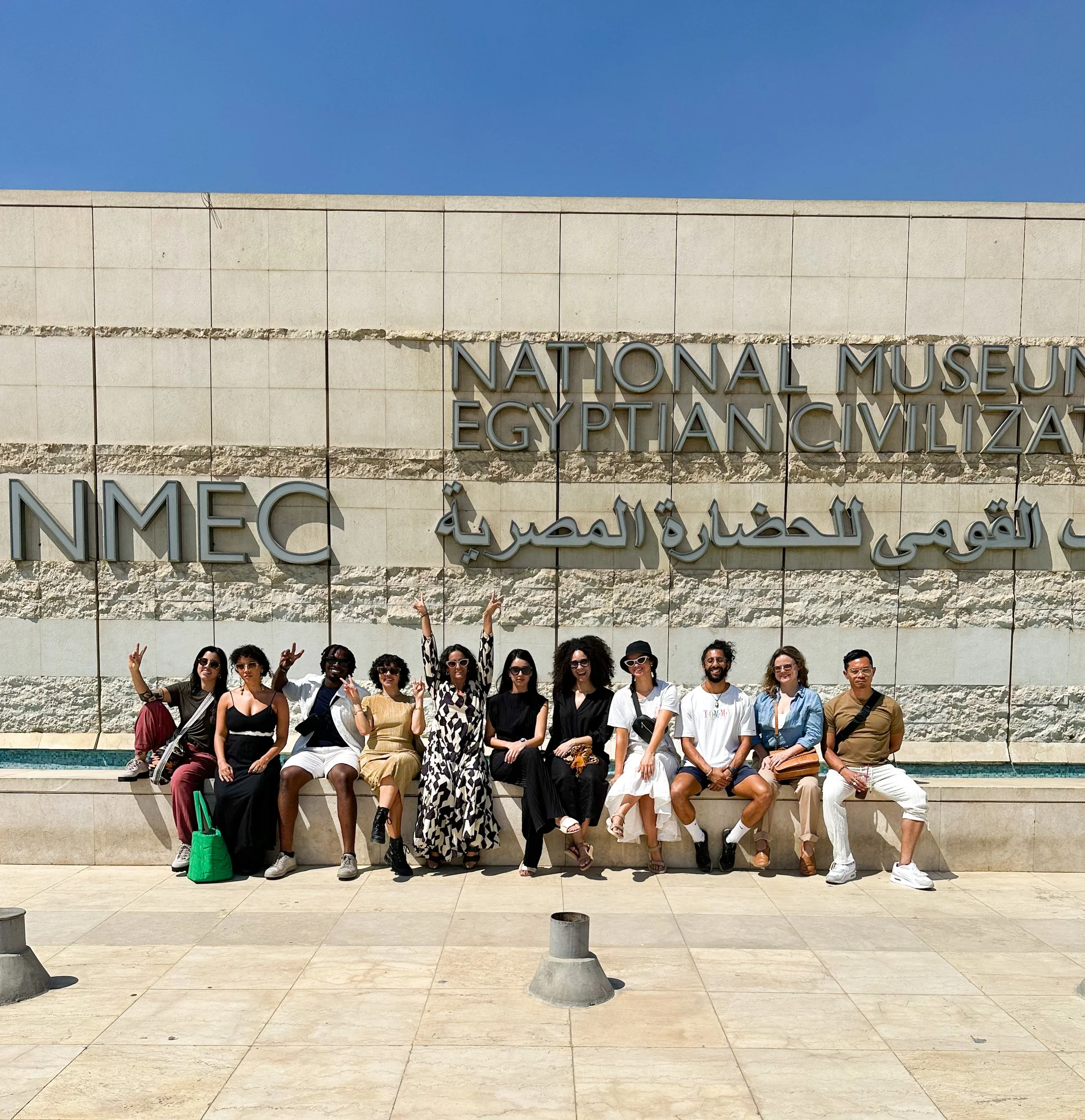
Group trip from 2023.
Here are factors to consider while packing:
Climate
The climate in Egypt varies throughout the country. The northern parts of Egypt, such as Cairo and Alexandria, are cooler than the southern parts of Egypt, such as Luxor and Aswan, which are typically about 10 degrees warmer. And the desert destinations, such as Siwa Oasis, fluctuate in temperature more, as the days are hotter and the nights are cooler.
The summers typically get extremely hot by July and August, reaching highs of 45 °C, 113°F during its hottest, which is why I recommend not going in the summer.
The Best Time to Travel to Egypt
The best time of year to visit Egypt is from October to April, when the weather is much more temperate. My favorite months are November and April, but anytime in between is great. This is also the busiest time of year to travel, as this is peak tourism season. The further south you are, the warmer it is year-round.
That said, it helps to have layers handy if you’re traveling in the winter months, especially to the desert destinations or northern areas.
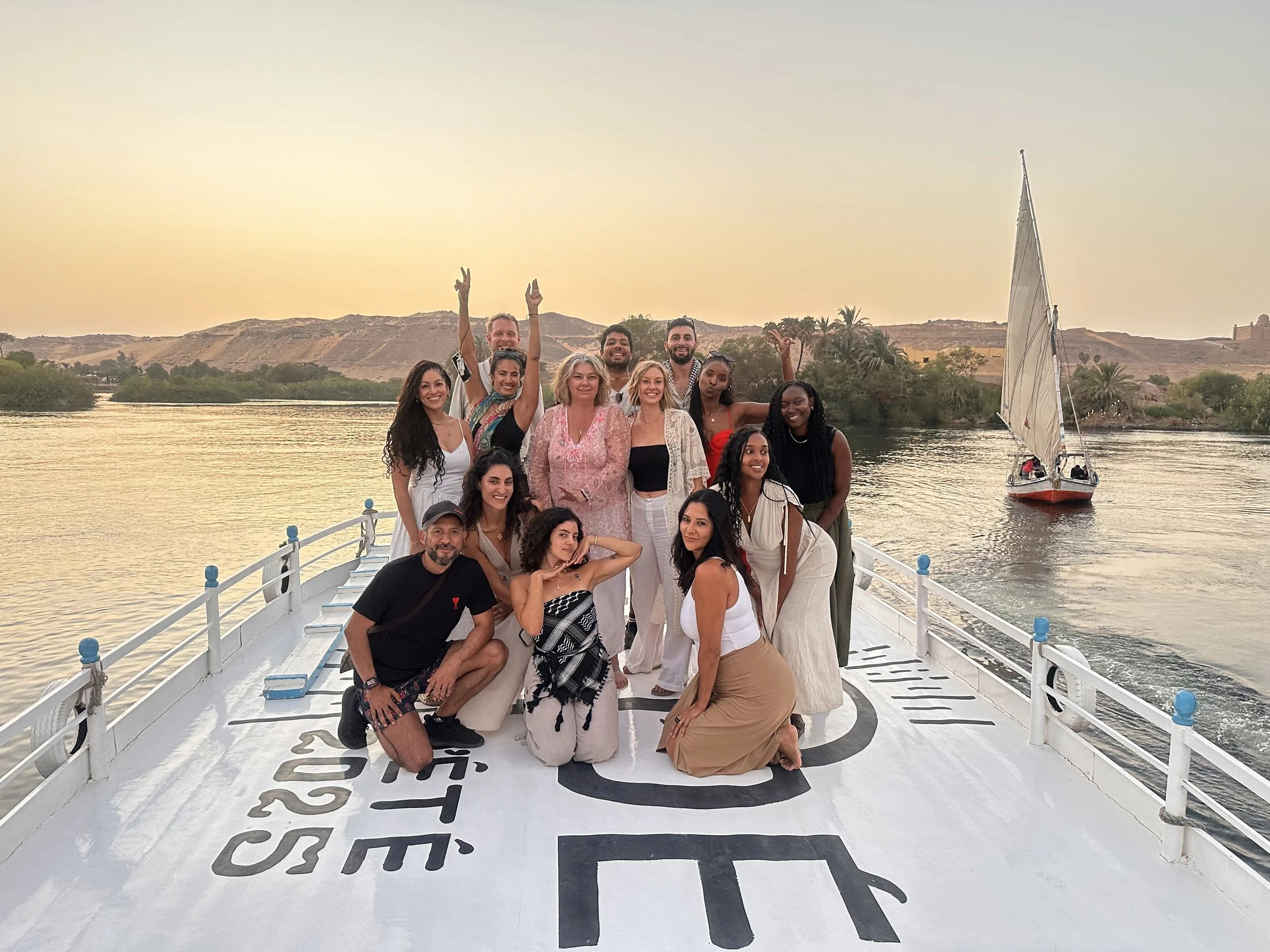
From our group trip in 2025.
I recommend bringing the following:
A wide-brimmed hat
A shawl for layering and covering the chest and shoulders
High SPF for your face (UV rays are high!)
A sweater/jacket to wear at night during high season (especially November-March)
If you’re traveling to the desert in the winter months, bring thick socks and heavy layers for the nights.
You can download my free packing checklist for a compiled list of items to bring.
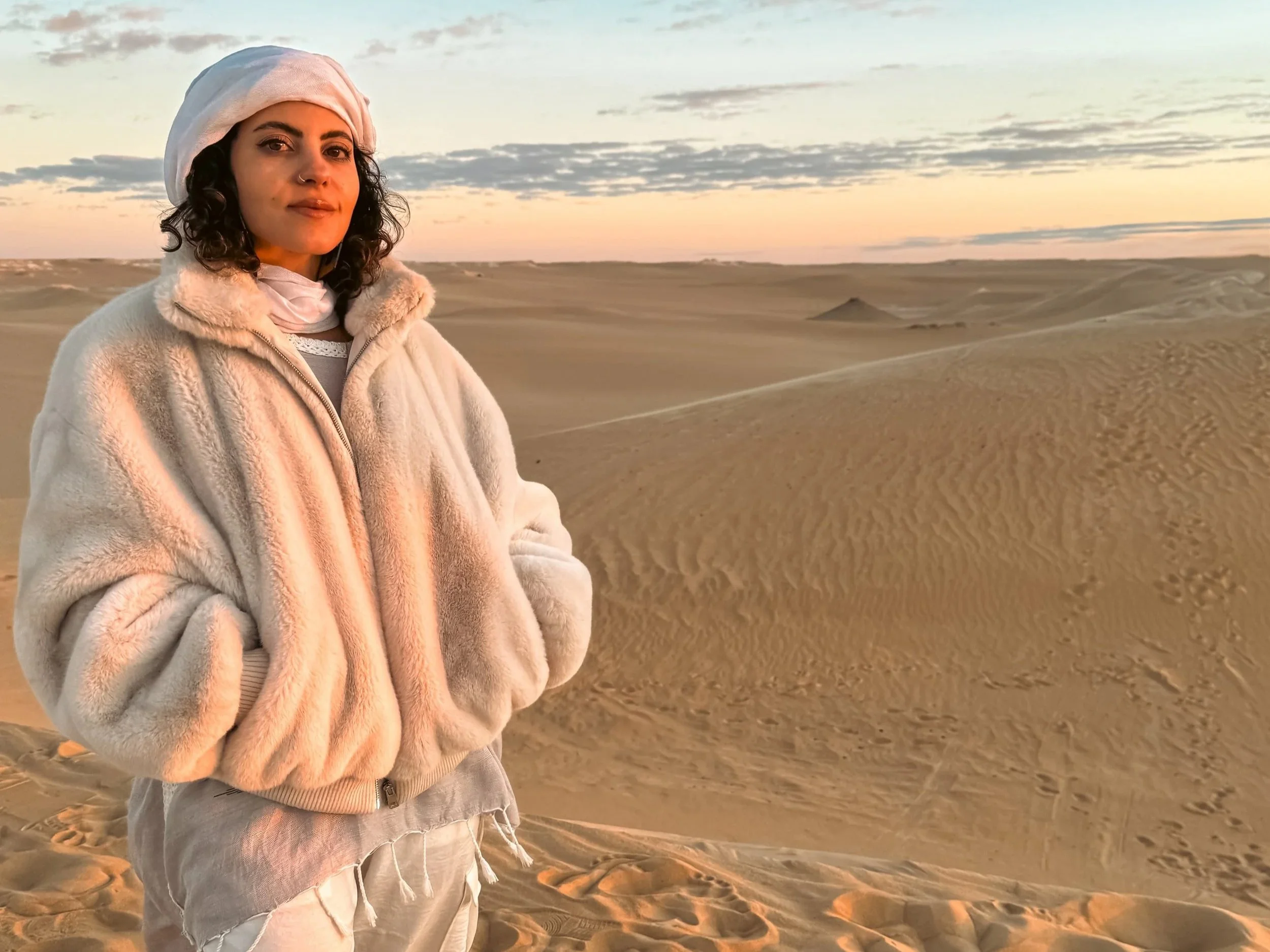
This is me in Siwa Oasis in November, wearing a fur coat. It was warm-ish during the day and cold/windy at night.
Culturally Respectable Clothing
Some of the most common questions I get are about clothes. People often ask me, “Do I have to cover my hair?” “Is it okay to wear shorts?” “What do I wear in the streets of Egypt?”
No, you don’t need to cover your hair as a woman. You can generally wear what you feel comfortable in, keeping in mind the cultural norms. When walking in the streets of major cities like Cairo, it’s not advisable to show your legs, shoulders, or stomach. Dressing modestly and comfortably is what I recommend.
There are specific times and places where it’s more important to be respectful of the conservative culture. For example, it is fine to wear a dress that shows your shoulders or a bit of leg when you’re at the Pyramids of Giza. But if you plan to visit Old Cairo, which is full of historic churches and mosques, it’s respectful to cover these body parts. I personally bring a shawl with me that allows me to cover my shoulders if needed.
If you don’t, you may attract stares and some unwanted attention, especially as a woman. It’s also rare that Egyptian men wear shorts or cut-off shirts except at the gym, at the beaches, or in more secluded suburban-like areas.
That said, in most beach towns such as Sahel (North Coast), Dahab, Marsa Alam, Hurghada, and Sharm El Sheikh, it’s acceptable to wear whatever you want, bikini included.
You’ll likely be able to get away with most things as a foreigner, and many locals are used to seeing people from all over the world. So don’t stress it too much!

Egypt with Moni’s group trip in 2023! Apply to join our next Egypt crew.
Tech Preparedness
This is important! You’ll definitely need a universal or Type-C Adapter if you’re coming from the Western Hemisphere. Egypt uses the same two-pronged plug-in as most European countries, and if your appliances aren’t compatible, you do not want to be stuck with a dead battery while traveling.
Also, keep in mind that some appliances may have too high a voltage to plug into some adapter ports. I’ve definitely blown a socket or two trying to plug in a blow-dryer or curling iron into one of these. So be sure to get one that has a voltage converter to be safe.
Cameras
Certain historical sites will charge extra for professional DSLR cameras with large lenses or not allow you to bring it in. I suggest bringing an iPhone camera, GoPro, or 360-degree camera with you. There are opportunities for professional photoshoots at the sites with your guide for an extra fee. If you’re on one of my group trips, I always hire a photographer to come in with a media pass and a professional camera. If you need help with this, feel free to reach out.
Passports and Travel Insurance Documents
Make sure to have not only your passport but a digital or printed copy of your passport in case it gets lost. Having other important documents, such as insurance, prescriptions for medications, and other legal documentation, is necessary in case something goes awry.
When it comes to prescriptions, it’s important to remember that some medications are considered illegal to bring into the country. If your medical containers are unlabeled or aren’t clearly prescribed by a doctor, it’s smart to bring proof so as not to risk them getting confiscated at border control.
What to NOT Bring
Drones are forbidden in Egypt unless you have government permission, which is very hard to get. Don’t risk it.
Illegal drugs, obviously, but also THC/CBD products. Egypt has very strict drug laws with severe penalties.
Certain prescription medications. If you have one, be sure to keep it in its original packaging, and bring a doctor’s letter or prescription note.
Anything that could be considered a weapon, such as pepper spray, sharp blades, scissors, or similar items.
Random unmarked powders or herbs (these may be confiscated)
Wildlife, sea shells, coral, or anything that might harm local ecosystems.
Agricultural products such as seeds or plants.
Make sure to download this free packing checklist for your Egypt tripso you can bring only what you need and cross everything off as you pack!